Affecting as many as 20% of women worldwide, polycystic ovary syndrome (PCOS) is one of the most common causes of infertility and it often co-exists with insulin resistance.
Although no cure has yet been discovered, a safe and side-effect-free natural supplement called inositol has been found to improve PCOS symptoms like infertility, insulin resistance, weight gain, acne, and depression, as well as reduce the risk of diabetes.
In this article, we outline seven evidence-based ways that inositol helps to treat PCOS.
Things Off Down There?
What Is Inositol?
Inositol is a natural B vitamin that is naturally produced in the body. Its main functions include regulating insulin and cholesterol, as well as facilitating cell structure, mood regulation, metabolism, and the transmission of signals between nerve cells.
There are nine types of inositol, but the two main types that are helpful for PCOS are Myo-inositol and D-chiro-inositol.
7 Things to Know About Taking Inositol for PCOS
Various studies, as well as feedback from women’s health clinics, confirm that a regular dose of 40:1 Myo-inositol and D-chiro-inositol can not only regulate insulin levels for PCOS patients but also help regulate menstrual cycles & metabolism, improve ovarian health, reduce the overproduction of male hormones, and more.
Here are seven ways that inositol helps PCOS.
1. Inositol Helps Regulate Insulin and Blood Sugar Better Than Medication
Inositol has been proven to help cells receive the appropriate signals from insulin, thereby regulating insulin uptake and lowering blood sugar levels. It is, in fact, so effective that several studies have concluded inositol supplementation is often more efficient than the medication Metformin, which is usually prescribed for managing insulin resistance in PCOS patients. Unlike Metformin, inositol is 100% natural and has no severe side effects.
Insulin is a hormone released by the pancreas to help regulate sugar (glucose) in the bloodstream and it also acts as a conduit for glucose to be absorbed into the body’s cells, where it can be used as energy or stored in the liver and muscles for later use. Insulin resistance occurs when the cells are unable to effectively absorb glucose from the bloodstream. Or, to put it another way, the cells are not reacting to insulin as they normally would.
In this case, the pancreas makes more insulin to encourage the absorption of glucose, which typically results in low energy levels, slowed metabolism, weight gain, and increases the risk of developing diabetes and heart disease.
If you have PCOS and take Metformin, it is always advisable to speak with your healthcare professional before changing to an inositol blend.
2. Inositol Helps To Lower Androgens, Treat Acne & Reduce Excess Facial Hair
All females produce androgens (male sex hormones), however, PCOS patients typically have much higher levels than usual, which can cause irregular menstruation, excess facial hair (hirsutism), acne, and hair loss on the scalp. Because high androgen levels are linked to high insulin levels, inositol is believed to lower androgens due to its impact on regulating insulin.
By lowering androgen levels, women with PCOS often experience more regular menstruation, skin improvements, and less facial hair.
In a study carried out as early as 2009, researchers noted that androgen levels were particularly lower after participants took Myo and D-Chiro inositol for three months, and after six months more than 50% of the participants no longer suffered from acne or facial hair growth.
3. Inositol Improves Ovulation and Regulates Menstrual Cycles
Inositol directly supports ovulation and cycle regularity in women with PCOS, especially when insulin resistance and elevated androgens disrupt normal hormonal signaling. Many women with PCOS experience irregular cycles or anovulation, where ovulation does not occur at all.
By improving insulin sensitivity and restoring hormonal balance, inositol helps the body re-establish a more consistent ovulatory cycle. Research shows that taking a 40:1 ratio of myo-inositol to d-chiro inositol for 6 to 8 weeks can significantly improve menstrual regularity, enhance ovarian function, and support better egg quality.
Inositol also plays a broader role in fertility support. Clinicians commonly use it to improve pregnancy outcomes in women both with and without PCOS, including those undergoing assisted reproductive treatments such as IVF and ICSI.
4. Inositol Improves Fertility in Women with PCOS
Inositol plays a key role in improving fertility outcomes for women with PCOS by targeting the underlying hormonal imbalances that interfere with conception. Elevated androgens, irregular ovulation, and ovarian dysfunction can make it more difficult to get pregnant, but inositol helps restore the conditions needed for successful ovulation and fertilization.
By improving insulin sensitivity and supporting a balanced 40:1 ratio of myo-inositol to d-chiro inositol, inositol enhances ovulatory function and increases the likelihood of regular, high-quality egg development. Because of this, fertility specialists frequently use inositol as part of preconception support, particularly before egg retrieval in assisted reproductive treatments like IVF.
Clinical research supports these benefits. In one study, women with PCOS who took myo-inositol alongside folic acid during IVF experienced pregnancy rates that were significantly higher than those taking folic acid alone. Additional research has shown that women undergoing intrauterine insemination saw pregnancy rates increase after consistent inositol supplementation over a three-month period.
Through its ability to improve ovulation, egg quality, and hormonal balance, inositol serves as one of the most effective natural options for supporting fertility in women with PCOS.
5. Inositol Improves Your Metabolic Health
Inositol supports metabolic health by directly improving insulin sensitivity, which plays a central role in how the body regulates blood sugar, fat storage, and hormone balance. In women with PCOS, insulin resistance often contributes to weight gain, elevated cholesterol, and increased cardiovascular risk.
By helping the body use insulin more effectively, inositol can lower blood sugar levels and reduce the strain on metabolic systems. This improvement extends to key markers of metabolic health, including blood pressure and cholesterol levels.
Research shows that consistent inositol supplementation can help regulate lipid profiles, support healthier weight management, and reduce the risk of long-term complications such as heart disease and type 2 diabetes. Through these combined effects, inositol addresses one of the most important root causes of PCOS-related metabolic dysfunction.
6. Inositol Can Help PCOS Patients with Weight loss
Due to the association between insulin resistance and high cholesterol levels, weight gain is a common symptom of PCOS. Weight gain associated with PCOS is typically noticed around the abdominal area to begin with and tends to affect the entire body if left untreated.
However, due to the positive impact that inositol can have on insulin levels, hormone production, and cholesterol, the 40:1 Myo and -D-chiro inositol blend can help PCOS patients to lose weight and maintain a healthy weight while living with PCOS. To see optimal results when it comes to managing weight with PCOS, a healthy diet and regular exercise are recommended in conjunction with a regular intake of inositol.
7. Inositol Lowers Anxiety & Depression Associated with PCOS
According to clinical reports and medical research, psychological symptoms like anxiety, stress, and depression are common among PCOS patients. Often triggered by the onset of other PCOS symptoms like acne, weight gain, or the growth of excess facial hair, these mental health issues can sometimes impact women’s quality of life more than the physical symptoms.
Although various medications exist for treating psychological symptoms like anxiety, stress, or depression, pharmaceutical drugs often contribute to additional hormone imbalances in women with PCOS. Given this precedent, various studies surrounding the treatment of psychological symptoms in women with PCOS revealed that Myo-inositol was the most promising option due to the impact it can have on neurotransmitters.
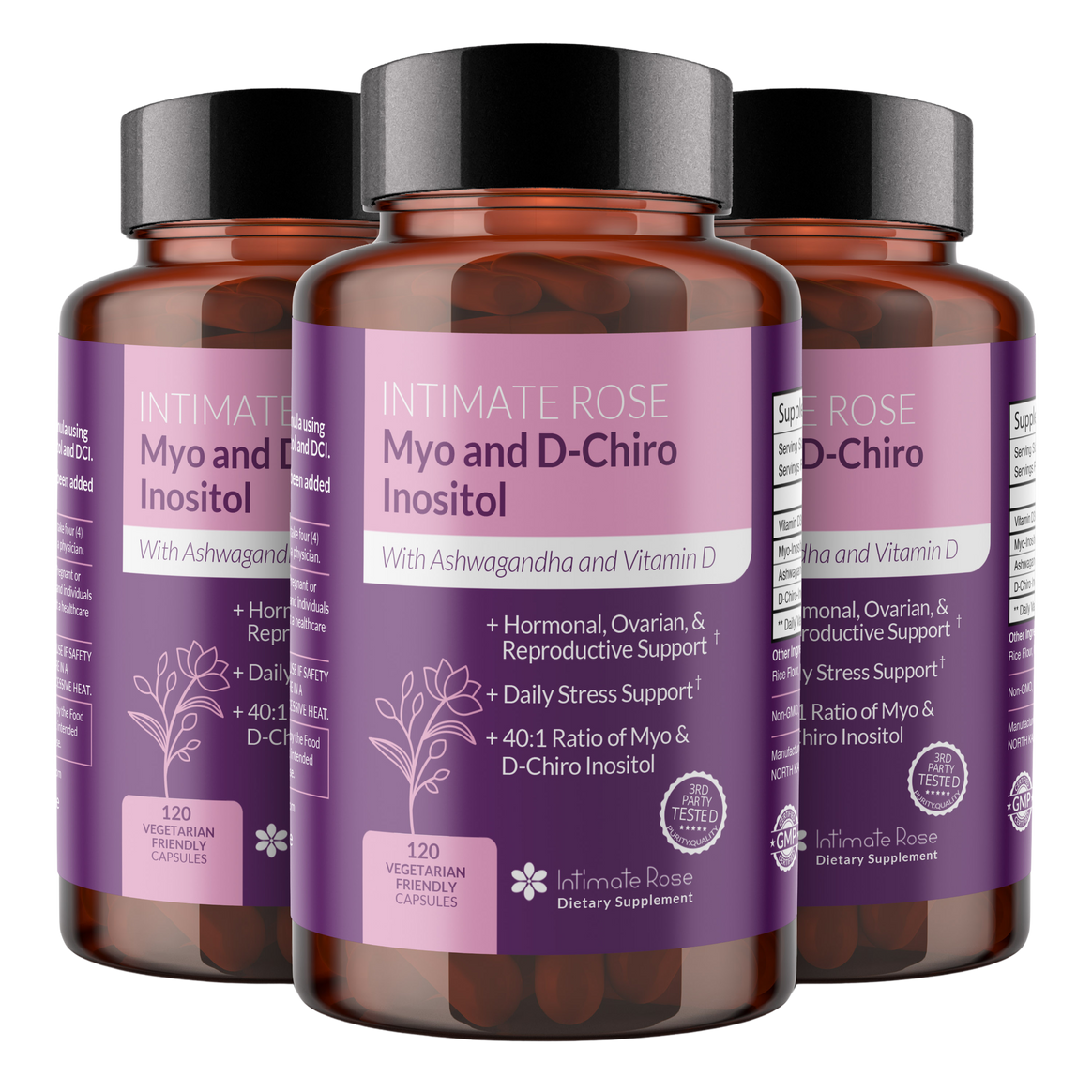
The perfect 40:1 inositol blend from Intimate Rose also includes the addition of ashwagandha and Vitamin D which has added positive effects on stress, anxiety, and mood. No other Inositol supplement on the market includes these extra mood-enhancing ingredients.
How does the Inositol supplement work?
Conclusion
Inositol is a natural B vitamin (or type of sugar) made by the body that helps to manage blood sugar levels, metabolism, and fertility. Medical researchers have found that when a 40:1 blend of Myo and D-Chiro inositols is taken regularly, the combination can be particularly effective in treating PCOS symptoms like ovarian function, infertility, weight gain, acne, depression, and hirsutism.
If you have PCOS and are considering using inositol supplements, it’s always a good idea to discuss new supplementation with your doctor to ensure it doesn’t impact any other medication you might be taking.
FAQs
Why Is Inositol Helpful for PCOS?
PCOS is a complex hormonal disorder characterized by irregular menstrual cycles, high levels of androgens (male hormones), cysts on the ovaries, and more often than not, insulin resistance. Although they often co-exist, researchers remain unsure whether insulin resistance contributes to the onset of PCOS or the other way around.
PCOS symptoms can vary for each woman but generally include infertility due to ovarian cysts and irregular menstruation, facial hair growth (hirsutism) & acne due to increased male hormones, and slow metabolism as well as weight gain due to insulin resistance.
Inositol is considered an effective treatment option for women with PCOS because its positive impact on insulin sensitivity, hormonal imbalance, and ovarian function can largely reduce the ensuing symptoms mentioned above.
Inositol-Rich Food or Inositol Supplements – Which Is Better for PCOS?
Inositols are naturally found in foods like beans, fruits, lentils, nuts, and a variety of seeds. Although studies show that sufficient levels of inositols can be consumed through diet, it can be difficult to ensure adequate levels, or the ideal blend, for PCOS patients to feel relief.
For the best results in managing PCOS symptoms, research shows that Myo-inositol and D-chiro-inositol should be regularly taken in a specific ratio of 40:1 along with a healthy, low-sugar diet and regular exercise. This means that PCOS patients will see better results from inositol supplements as opposed to consuming them through food.
The 100% natural inositol supplement from Intimate Rose incorporates the perfect blend of Myo and D-Chiro inositol, for example, as well as added ashwagandha and Vitamin D for further mood support and lower stress levels when living with PCOS.
References
Web MD – Inositol - https://www.webmd.com/vitamins/ai/ingredientmono-299/inositol
Womens Health - Polycystic ovary syndrome - https://www.womenshealth.gov/a-z-topics/polycystic-ovary-syndrome
National Library of Medicine - Short-term effects of metformin and myo-inositol in women with polycystic ovarian syndrome (PCOS): a meta-analysis of randomized clinical trials - https://pubmed.ncbi.nlm.nih.gov/30614282/
National Library of Medicine - Polycystic ovary syndrome (PCOS) and hyperandrogenism: the role of a new natural association - https://pubmed.ncbi.nlm.nih.gov/26491824/
National Library of Medicine - Efficacy of myo-inositol in the treatment of cutaneous disorders in young women with polycystic ovary syndrome - https://pubmed.ncbi.nlm.nih.gov/19551544/
National Library of Medicine - Effects of Inositol(s) in Women with PCOS: A Systematic Review of Randomized Controlled Trials - https://www.ncbi.nlm.nih.gov/pmc/articles/PMC5097808/
National Library of Medicine - Insulin sensitiser agents alone and in co-treatment with r-FSH for ovulation induction in PCOS women - https://pubmed.ncbi.nlm.nih.gov/20222840/
National Library of Medicine - Inositol treatment for psychological symptoms in Polycystic Ovary Syndrome women - https://pubmed.ncbi.nlm.nih.gov/33755979/
Things Off Down There?